
A New Option for High-Risk Patients
Aortic regurgitation occurs when the aortic valve fails to close completely, allowing blood to flow backward into the left ventricle. Left untreated, it can progress to heart failure. Until now, patients deemed too high-risk for open-heart surgery had few options beyond palliative care.
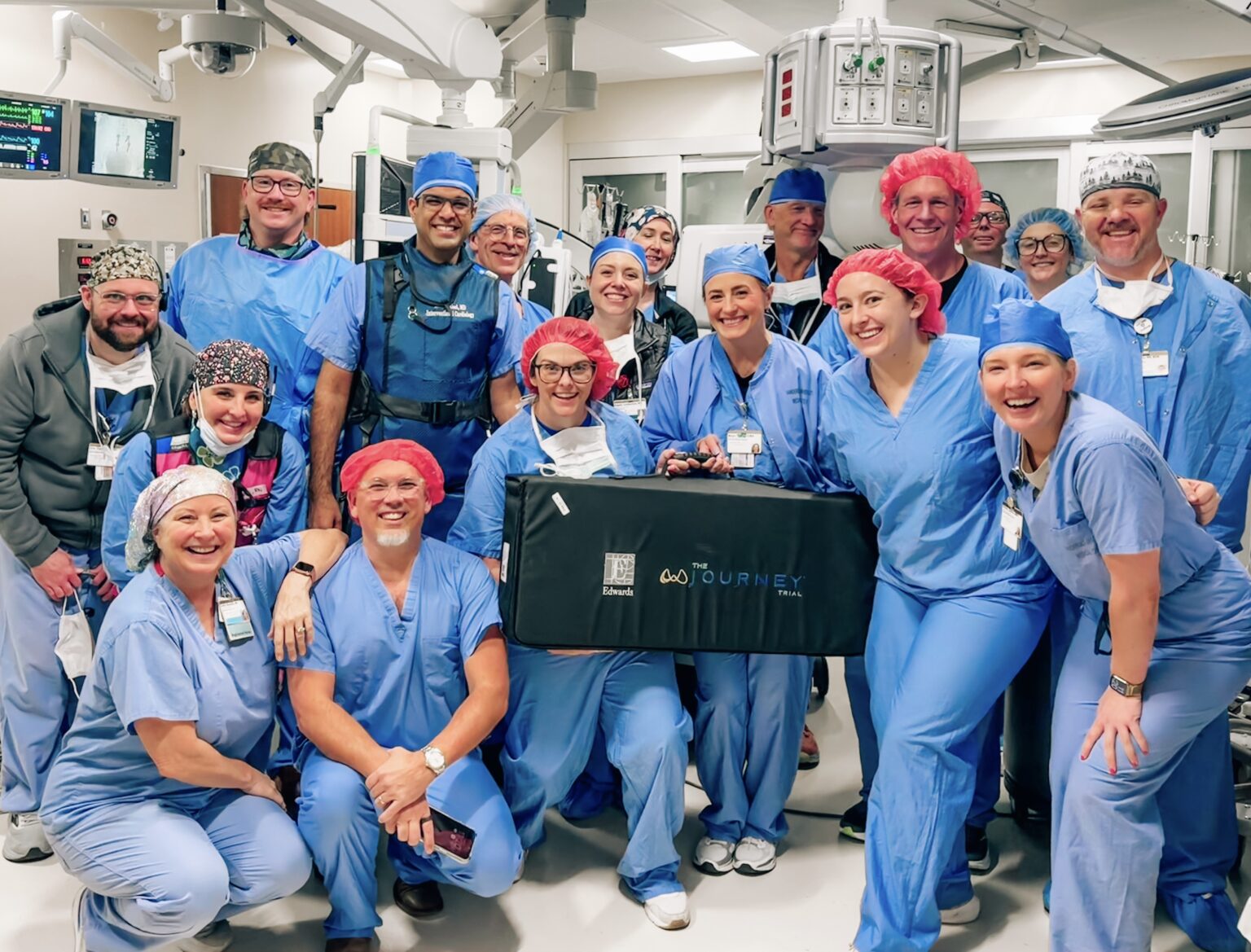
The J-Valve changes that. The minimally invasive, catheter-guided procedure takes under an hour, and patients typically return home within one to two days. With its addition, VHVI now offers transcatheter options for every major valve disease — closing the final therapeutic gap in structural heart care. The trial remains open for enrollment, meaning other eligible high-risk AR patients may still qualify.1
VHVI is a recognized destination center of excellence for structural heart therapies, drawing patients from across Tennessee and surrounding states. Its reputation rests on a high volume of procedures, strong clinical outcomes, and active participation in clinical trials for next-generation devices.1
VUMC’s Cardiac Expertise — Encoded in NashBio’s Data
As a wholly owned subsidiary of VUMC, NashBio’s real-world data directly reflects the depth of care delivered at one of the nation’s leading academic medical centers. VUMC’s leadership in complex cardiac interventions is embedded in NashBio’s Clinical Specialty (CS) Cardiology dataset, which integrates longitudinal clinical records with expert-curated measures of cardiac function and remodeling — covering more than 930,000 unique patients, 67 million rows of data, and 75+ clinical measures extracted from echocardiography reports and 25+ from ECG reports.2
Critically, the CS Cardiology dataset goes beyond ICD billing codes. Standard real-world data often traps critical clinical detail inside imaging and procedure reports, forcing researchers to choose between surface-level diagnosis codes and costly manual chart review. CS Cardiology eliminates that trade-off by delivering analysis-ready cardiac measurements — including LVEF, NT-proBNP, high-sensitivity troponins, corrected QT intervals, and diastolic function parameters — natively integrated with longitudinal EHR data.2 Every variable is curated by domain experts to reflect real-world cardiology practice.
This depth of data supports the kind of research that matters most for structural heart disease: identifying at-risk and subclinical populations often missed by pre-defined cohort datasets, designing complex phenotypes beyond generic heart failure labels, and monitoring drug safety with granular evidence from ECG and echo reports over time.2
Why It Matters for Life Sciences
For biopharma, medtech, and diagnostics companies working in cardiovascular disease, VUMC’s clinical innovation and NashBio’s data infrastructure together represent a distinctive resource. As novel therapies like the J-Valve advance through clinical trials toward potential regulatory approval, real-world evidence on patient selection, procedural outcomes, and long-term valve performance will be essential for regulatory submissions and post-market studies.
NashBio’s Advanced Analyses capabilities — including phenotyping, cohort design, and multi-omic integration — help partners move efficiently from data to evidence, drawing on a patient population that reflects the complexity and comorbidity burden of real-world clinical practice.3
Smarter Data Is In Our DNA. NashBio delivers high-quality real-world data and multi-omics, powered by expert analytics and advanced technologies, to de-risk drug development, accelerate evidence generation, and boost regulatory success. Our experts transform fragmented healthcare information into clean, research and AI-ready datasets — accelerating your R&D from discovery to clinical application and beyond.
Get in touch with our team to learn more about NashBio’s cardiovascular data capabilities.

